English Ptesi - Cuma 09:00-18:00 +90 5320120958

Enhancing Creativity and Innovation with TRIZ Methodology
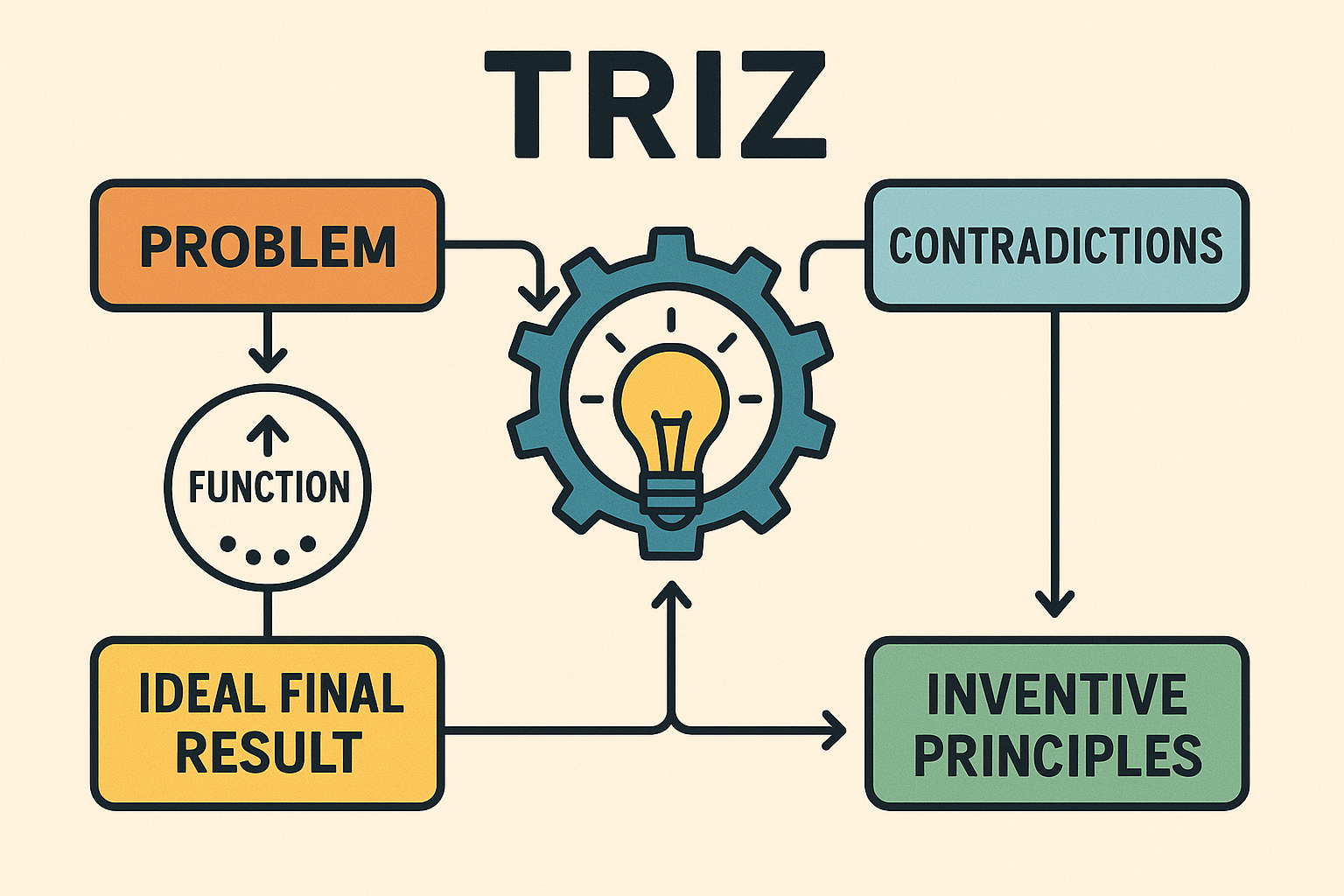
What is TRIZ?
TRIZ (Teoriya Resheniya Izobretatelskikh Zadatch) is an abbreviation of Russian origin, which can be translated as “Theory of Inventive Problem Solving” or “Theory of Innovative Problem Solving”. TRIZ was developed by the Russian engineer and scientist Genrich Altshuller in 1946. Its primary purpose is to solve problems encountered in engineering and innovation processes more effectively and to generate new, innovative ideas.
The main principles of TRIZ are as follows:
Macro and Micro Levels of Perspective: TRIZ takes a broad perspective on problems and encourages thinking at both macro and micro levels. This helps to better understand the fundamental causes of problems and potential solutions.
Avoidance of Existing Solutions: TRIZ focuses on surpassing previously used solutions and finding unconventional, innovative solutions. This encourages creative thinking by moving away from reliance on existing knowledge and experiences.
Recognition of Repetitive Problems: TRIZ argues that many problems and solutions are fundamentally addressed with similar principles. Therefore, it aims to create a kind of general principle set to find similar solutions to similar problems.
Principles of Innovation and Evolution: TRIZ advocates that evolution and innovation are based on specific principles. These principles encourage continuous development by making systems more complex and effective.
TRIZ is used in various fields such as patent analysis, problem-solving, product development, and process improvement. This methodology provides a toolkit for removing mental barriers, optimizing engineering processes, and generating innovative solutions.
Why TRIZ?
Steps for Working with TRIZ
What Do We Offer?
Psychological Inertia is defined as when a person thinks that the solution to a problem lies within their own experience and expertise and does not explore alternative technologies/fields to develop new concepts. It can stem from the following reasons:
A person may believe that the solution to a problem lies within their own expertise or industry, thus limiting their exploration of alternative solutions.
In TRIZ approach, the belief is that the solution to your problem may lie anywhere within the Solution Space. Psychological Inertia restricts us to our own expertise.
TRIZ is an interdisciplinary problem-solving discipline developed for everyone, regardless of their profession, expertise, or specialization. The greatest achievements in art and science have come from building upon others’ previous work. However, these developments and previous problems and solutions are typically discussed in the language of the discipline in which they occurred.
As a result, only those with expertise can truly understand these developments. While this is great for them, it renders everyone else ineffective. Problem-solving is seen as discipline-specific – for example, there is an assumption that lawyers must encounter very different problems from chemists – so people tend to stay within their industries and areas of expertise when they encounter problems and seek solutions.
In the TRIZ approach, the belief is that if you can understand how your problem resembles someone else’s, you can apply their clever solutions. Instead of reinventing the wheel, you find new and exciting ways and ideas to use smart existing concepts to give you what you want.
TRIZ (Theory of Inventive Problem Solving) is a lateral problem-solving method that enables us to solve problems more quickly than the Vertical/Horizontal Problem-Solving methods we currently use in R&D and New Product/Service Development processes. TRIZ is a collection of methods used by people to solve problems, developed by examining approximately 2 million patents.
For example;
Sandblasting method is used to clean forged metal parts. This method can leave sand particles behind, which can then be difficult to clean and can get stuck in small holes. This constraint can be eliminated by applying TRIZ’s Principle 35, “Changing Physical/Chemical Properties”, by using dry ice instead of sand.
Take a step in your innovation journey and leverage the power of TRIZ today. Contact us now.
